
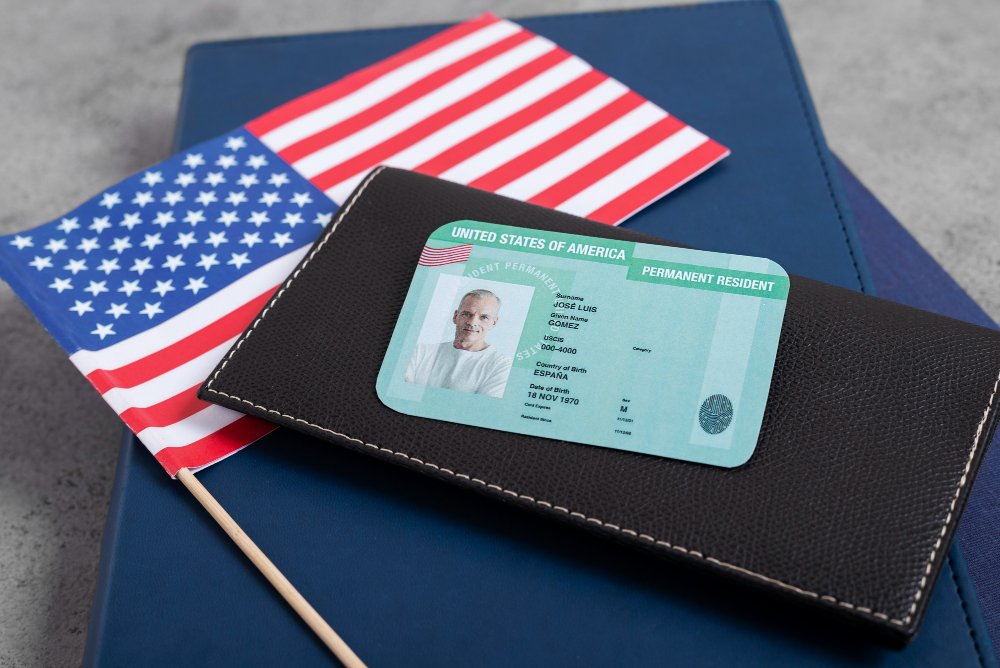
If you are reading this, you have likely already taken the brave step of building a career in the United States on a work visa, or you are planning to do so. And now, you are asking yourself the question that keeps so many international professionals awake at night: how do I turn this temporary stay into permanent residency? You want stability. You want the freedom to change jobs without fear. You want to buy a home, start a business, or simply sleep better knowing that your future in this country is secure. I understand that feeling completely. The good news is that 2026 brings several clear, actionable pathways to get a U.S. green card through employment faster than you might think. This guide will walk you through the fastest ways to get a U.S. green card through employment in 2026, highlighting the visa categories, priority dates, and strategies that truly move the needle.
Understanding Employment Based Green Card Categories for Speed
Before we dive into the fastest ways to get a U.S. green card through employment, we need to talk about the five main employment based preference categories. Knowing which category fits your profile is the single most important factor in determining your wait time.
The EB 1 category is for priority workers. This includes individuals with extraordinary ability in sciences, arts, education, business, or athletics. It also includes outstanding professors and researchers, as well as certain multinational managers and executives. For most countries, the EB 1 category is current or very close to current, meaning there is little to no backlog. If you qualify for EB 1, this is absolutely the fastest way to get a U.S. green card through employment.
The EB 2 category is for professionals holding advanced degrees or persons with exceptional ability. This is the most common pathway for international applicants with master’s degrees, PhDs, or significant professional experience. However, wait times vary dramatically by country of birth. For applicants born in India or China, the EB 2 backlog can stretch several years. For applicants from the rest of the world, EB 2 is often current or has a short wait.
The EB 3 category is for skilled workers, professionals, and other workers. This includes bachelor’s degrees and certain technical roles. The wait times for EB 3 are generally longer than EB 2 for most countries, and significantly longer for India and China.
The EB 4 category is for special immigrants, which is very narrow and not relevant for most readers. The EB 5 category is for immigrant investors, requiring a minimum investment of $800,000 to $1,050,000 and the creation of at least ten full time jobs for U.S. workers. While EB 5 can be fast, the capital requirement puts it out of reach for many.
The Absolute Fastest Way: EB 1 Extraordinary Ability
If you have won major international awards such as a Nobel Prize, Olympic medal, or Academy Award, the EB 1 extraordinary ability pathway is essentially immediate. However, most people do not have that level of recognition. The good news is that you do not need a Pulitzer Prize to qualify. United States Citizenship and Immigration Services allows you to meet just three out of ten alternative criteria. These criteria include things like published articles about your work in major media, judging the work of others in your field, original scientific or scholarly contributions of major significance, and commanding a high salary relative to others in your location and industry.
For example, if you are a software engineer who has spoken at major conferences, holds two patents, has published research papers, and earns significantly above the median for your role, you may already qualify for EB 1 without realizing it. I strongly encourage you to review the EB 1 criteria carefully. Working with an experienced immigration attorney to build your case is expensive but worth every dollar. For many international applicants, EB 1 is the fastest way to get a U.S. green card through employment, reducing a potential seven year wait into six months or less.
The EB 2 NIW National Interest Waiver Pathway
The EB 2 National Interest Waiver is one of the most powerful and underutilized fastest ways to get a U.S. green card through employment. Normally, an employment based green card requires a U.S. employer to sponsor you, complete a labor certification, and prove that no qualified U.S. worker is available for your role. The NIW waives that labor certification requirement, allowing you to self petition in many cases.
To qualify for an EB 2 NIW, you must first meet the EB 2 criteria of holding an advanced degree or demonstrating exceptional ability. Then you must prove that your work has substantial merit and national importance, that you are well positioned to advance your proposed endeavor, and that on balance, waiving the job offer and labor certification requirements benefits the United States.
This pathway has become significantly faster in recent years for certain fields. Researchers working on clean energy, artificial intelligence, semiconductor design, biotechnology, and public health have seen remarkably fast processing times. Some EB 2 NIW applications filed in 2025 were approved in under four months. For international applicants who do not qualify for EB 1, the NIW is often the fastest way to get a U.S. green card through employment, especially if you are from a backlogged country like India or China.
Leveraging the PERM Labor Certification Process Efficiently
For most international applicants, the traditional PERM labor certification process is the only option. But even within this slower pathway, there are ways to move faster than average. The PERM process involves your employer testing the labor market, filing a prevailing wage determination, and then submitting a PERM application to the Department of Labor. This entire process typically takes 12 to 18 months before you can even file your I 140 immigrant petition.
However, you can accelerate this by targeting employers who have already completed PERM for similar roles. Large technology companies, major universities, and research hospitals often have pre approved job descriptions and streamlined processes. When you join such an employer, they can file your PERM immediately rather than starting from scratch. Additionally, if you have worked for a previous employer who filed a PERM on your behalf, that labor certification may be portable under certain conditions. Ask potential employers directly about their PERM backlog and average processing times during your interview process. This single question can save you an entire year.
Concurrent Filing to Bypass Priority Date Delays
One of the smartest strategies among the fastest ways to get a U.S. green card through employment is concurrent filing of your I 140 immigrant petition and I 485 adjustment of status application. Normally, you must wait for your priority date to become current before filing for adjustment of status. But when the visa bulletin shows your category as current for your country of birth, you can file both forms simultaneously. This allows you to receive your employment authorization document and advance parole travel document within five to seven months, even if your green card takes longer to approve.
For applicants from countries with current priority dates, such as most of the world except India and China, concurrent filing can dramatically reduce the practical wait time to employment authorization and travel freedom. You can start working for your sponsoring employer or even a different employer under certain portability rules, and you can travel internationally without abandoning your application. This is not a green card, but it is a massive quality of life improvement while you wait.
Premium Processing for I 140 Petitions
If you want the fastest ways to get a U.S. green card through employment, you absolutely must request premium processing for your I 140 petition. For an additional fee of $2,500 as of 2026, United States Citizenship and Immigration Services guarantees a decision on your I 140 within 15 calendar days. Without premium processing, you could wait six to twelve months just for the I 140 approval.
Premium processing is available for EB 1, EB 2, and EB 3 petitions, including EB 2 NIW cases. I always advise international applicants to pay this fee themselves if their employer is unwilling. Yes, it is expensive. But compared to the stress of waiting nearly a year for a simple eligibility decision, the cost is trivial. That approved I 140 locks in your priority date, which is the single most valuable asset in your green card journey. Do not skip premium processing.
Country Specific Strategies for India and China Born Applicants
If you were born in India or China, I need to be honest with you. The standard EB 2 and EB 3 backlogs are severe, with wait times stretching five to ten years or more. But even in this difficult situation, there are fastest ways to get a U.S. green card through employment if you know where to look.
First, explore the EB 1 category aggressively. The backlog for EB 1 for India and China is much shorter, often one to two years rather than a decade. If you can build a credible EB 1 case, do it. Second, consider the EB 5 investor visa if you have access to the required capital and can tolerate the risk. Third, look into cross chargeability. If your spouse was born in a country with no backlog, such as Canada, the United Kingdom, or Australia, you can use your spouse’s country of birth for priority date purposes. This simple provision can take you from a ten year wait to a one year wait overnight. Many international applicants do not know about cross chargeability, and that is a tragedy because it is genuinely one of the fastest ways to get a U.S. green card through employment for married couples.
The Role of Schedule A Occupations in Accelerating Your Green Card
Schedule A is a list of occupations that the Department of Labor has predetermined to have a shortage of qualified U.S. workers. If your occupation appears on Schedule A, your employer can skip the entire PERM labor certification process entirely. That eliminates 12 to 18 months of waiting.
As of 2026, Schedule A includes physical therapists, professional nurses, and individuals of exceptional ability in the sciences or arts. If you are a physical therapist or a nurse, congratulations. You have access to one of the fastest ways to get a U.S. green card through employment. The processing time for Schedule A cases is dramatically faster because the labor market test is already deemed satisfied. For scientists and artists, you still need to prove exceptional ability, but the absence of the PERM requirement alone is worth its weight in gold.
Maintaining Lawful Status While Your Green Card Processes
Even the fastest ways to get a U.S. green card through employment will not help you if you fall out of status while waiting. You must maintain continuous lawful status from the moment you file your green card application until it is approved. This means keeping your H 1B valid, or ensuring your employment authorization document arrives before your current status expires. If you are on an H 1B visa, you can continue extending it in one year increments beyond the six year limit once your PERM or I 140 has been pending for a certain period. Work closely with your employer’s immigration counsel to avoid gaps. A single lapse in status can force you to leave the country and apply for a green card through consular processing abroad, adding years to your timeline.
Conclusion
Getting a U.S. green card through employment in 2026 is absolutely achievable, and you now have the roadmap to do it as quickly as possible. The fastest ways to get a U.S. green card through employment come down to understanding your eligibility for EB 1 extraordinary ability, pursuing the EB 2 National Interest Waiver if you can self petition, using premium processing without exception, and leveraging strategies like concurrent filing and cross chargeability if you are married to someone from a non backlogged country.
Do not wait for a perfect situation. Start gathering evidence for your EB 1 or EB 2 NIW case today. Reach out to three immigration attorneys for initial consultations. Most offer a free first call. Ask them specifically how they have helped international applicants in your exact situation. And remember, your priority date is your most valuable asset. Every day you delay is a day added to your wait. You have worked too hard and sacrificed too much to let bureaucracy stand between you and the permanent, stable life you deserve. Take action now, and this time next year, you could already be holding your green card.
